How to make tile floor less slippery is a practical question. Tile wears well and is expensive to replace, yet loses friction the moment soap residue accumulates. An estimated 234,094 nonfatal bathroom injuries were treated in U.S. emergency departments in 2008,1 with falls accounting for 81.1% of them.1 Most of those floors were not broken. Contamination was the problem, not the structure. This guide walks through four approaches for an existing tile floor, with trade-offs compared. For flooring material choices and wet-zone design, see the slip-resistant flooring overview.
Quick Answer
How do you make an existing tile floor less slippery without replacing it?
Start by removing soap scum and hard-water deposits, which drop friction by 10-20% on their own.4 Then choose from three additional layers of protection: secured anti-slip mats in wet zones, peel-and-stick traction strips at transitions, or a chemical anti-slip treatment applied to the tile surface. Each approach addresses a different part of the slip problem. Each has a different durability and maintenance commitment.
Key Takeaways
- Tile floors lose 30-50% of their dry friction coefficient when wet, and a further 10-20% when soap residue is present.4
- Deep cleaning alone restores baseline friction by removing the contamination layer before adding any other treatment.
- ANSI A326.3 sets 0.42 as the minimum acceptable dynamic coefficient of friction (DCOF) for wet interior floors designed for pedestrian use.5
- Anti-slip mats, traction strips, and surface treatments address different risk points and none replaces the others entirely.
- Heavily worn or polished tile may fall below the 0.42 threshold even when clean, which is the scenario where surface treatment or replacement earns serious consideration.
What Makes Tile Slippery
Tile floors lose friction in a predictable sequence. When a tile is clean and dry, the surface texture creates enough contact points to hold a shoe in place. Add water and a thin liquid film reduces contact between shoe sole and tile. Add soap residue, and the friction drops further still.
Dynamic coefficient of friction (DCOF) is the measure used to quantify how much resistance a floor surface offers to a shoe already in motion across it. ANSI A326.3 sets 0.42 as the minimum acceptable DCOF for wet interior pedestrian surfaces intended for regular foot traffic.5 A typical satin-finish ceramic tile tests at roughly 0.80-0.90 when clean and dry. Once wet and soapy, friction on the same tile routinely falls below 0.42.
Research measuring friction loss across surface conditions found:
“DFC values drop by 30-50% from arid to damp conditions, and by a further 10-20% from damp to foamy conditions.”4
In-Ju Kim, researcher, PLOS ONE (2026)
Soap scum is the compound formed when calcium and magnesium ions in hard water react with soap; the residue bonds to tile and grout lines and holds friction-lowering moisture against the surface long after water itself drains away.
The four steps in this guide interrupt the slip problem at different points. Cleaning removes the contamination. Mats and traction strips add a high-friction zone on top of the existing tile. Surface treatments change the tile’s own texture. Understanding which problem a floor actually has narrows the approach considerably.
Contamination is the most common cause of a tile floor becoming slippery in a home that was previously safe-feeling, and it is the one problem every other treatment assumes you have already solved.
Step 1: Deep-Clean the Tile Surface First
No other treatment works at full effectiveness on a contaminated surface. A surface coating applied over hard-water scale bonds poorly and wears through faster than the product label suggests. A mat placed over a filmy tile layer provides grip only where the mat sits. Before any other approach, the tile needs to be genuinely clean.
What you are removing depends on what has accumulated. Hard-water deposits respond to acidic cleaners: diluted white vinegar, citric acid solutions, or a commercial bathroom descaler. Soap scum responds to alkaline cleaners: a diluted dish soap solution, a baking soda paste, or a dedicated soap scum remover. Grout lines hold both types of buildup in a porous surface standard mopping misses.
How to deep-clean for friction restoration
Apply the appropriate cleaner to a dry surface and allow it to dwell for five to ten minutes before scrubbing. Use a stiff-bristle brush on grout lines rather than a sponge or microfiber cloth. Rinse thoroughly with clean water twice, since soap residue left by the rinse water creates the same contamination layer you are trying to remove. Let the floor dry completely before assessing what additional steps are needed.
How to verify the surface is clean
Pour a small amount of water on a cleaned, dry tile. Clean tile allows water to sheet off or spread across the surface with visible motion. A contaminated tile holds water in flat, motionless puddles because the soap film creates surface tension across the area. If the water does not move, the contamination is still present and deep cleaning should be repeated with an appropriate cleaner for the specific type of buildup.
Plan to repeat this process every two to four weeks in a bathroom used daily. Grout lines accumulate buildup faster than tile faces and benefit from a monthly scrub with a stiff brush regardless of how the tile itself looks.
One limitation to understand: deep cleaning restores the friction a tile’s texture is capable of producing. If the tile is older, polished, or has a dense high-gloss factory finish, cleaning removes the contamination but the tile’s own texture may still fall below 0.42 DCOF when wet. In that case, one of the remaining three steps adds the grip the tile’s surface does not provide on its own.
Step 2: Secure Anti-Slip Mats in High-Risk Zones
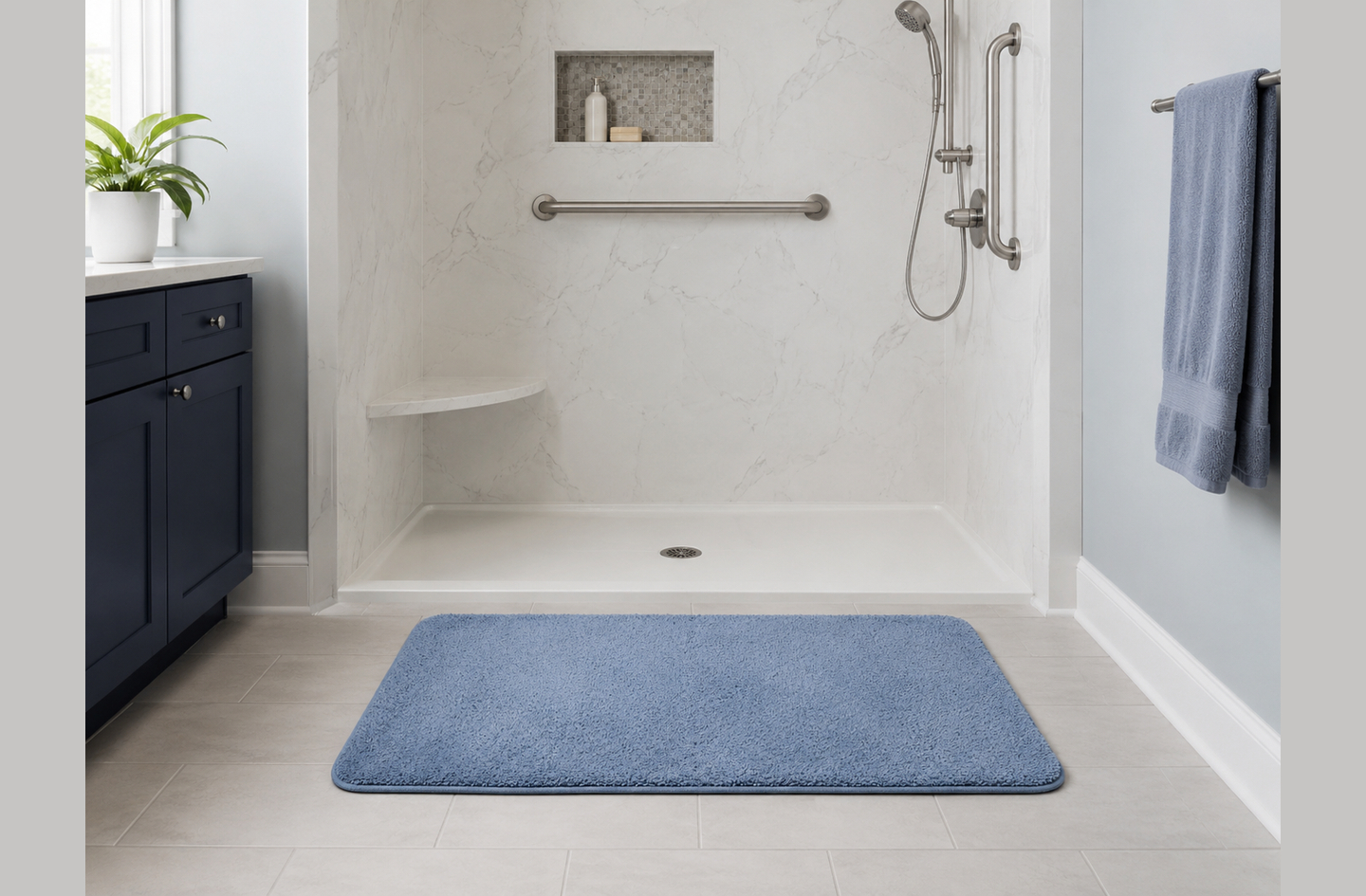
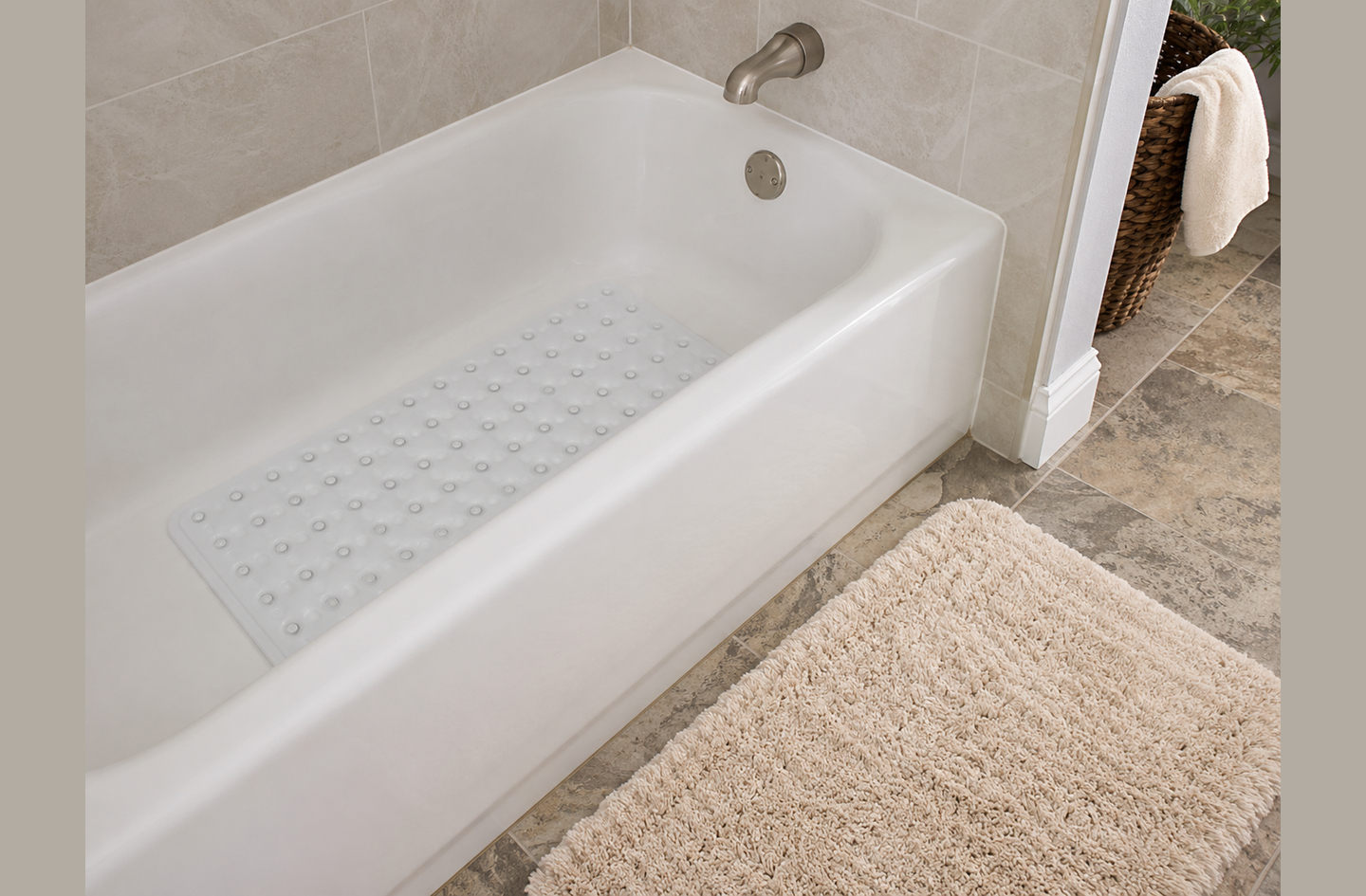
An estimated 65.8 per 100,000 people sustain injuries in or around the tub or shower annually, the highest rate of any bathroom zone.1 Anti-slip mats address the specific exit and entry points where a wet, bare foot makes first contact with the bathroom floor. The zone just outside the tub or shower, the area in front of a standing shower, and the floor between the toilet and sink are where that contact is most abrupt.
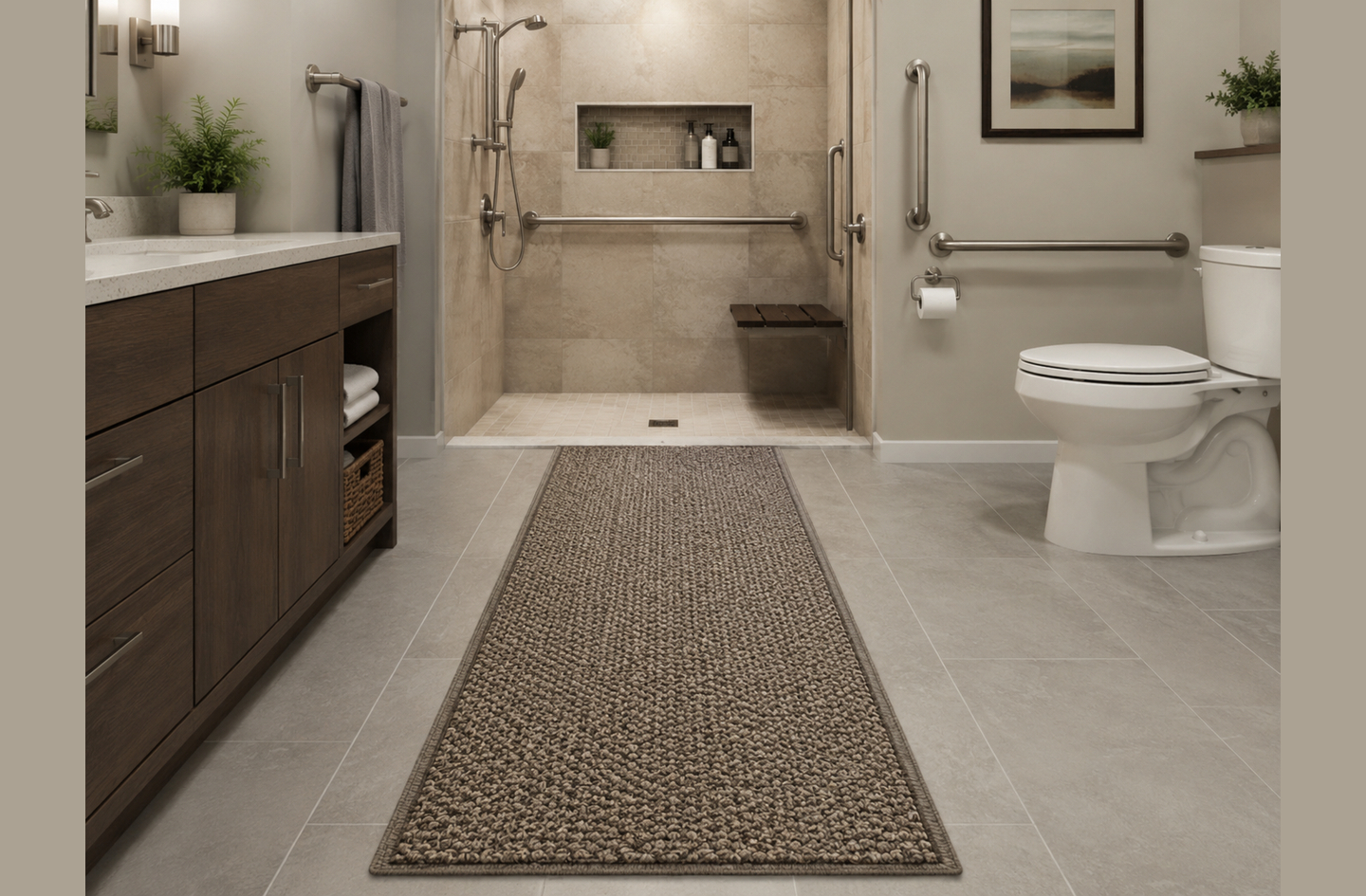
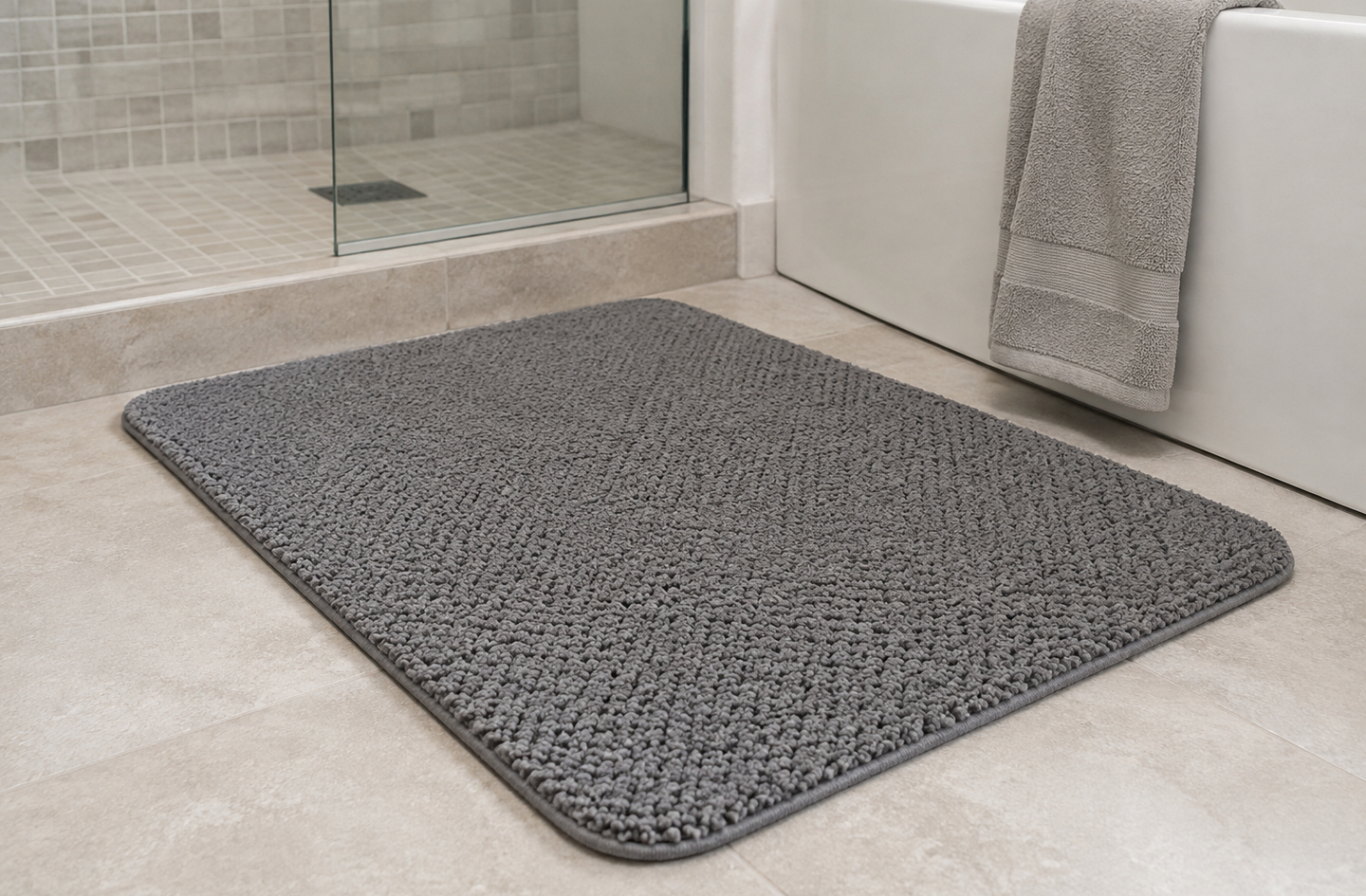
The effectiveness of a mat comes almost entirely from its backing, not its top surface. A heavy, textured mat with a foam backing slides on a smooth or slightly damp tile. A lighter mat with natural rubber sheet backing or a true suction-cup base holds reliably.
Backing types and where each works
Natural rubber sheet backing grips dry to slightly damp tile consistently and stays flat without curling at edges. Suction-cup backing holds particularly well on smooth, glazed tile when the tile surface is clean; on textured or grout-heavy floors, suction cups have fewer contact points and release more easily under lateral foot pressure. Avoid thin foam backing, which compresses and loses grip on any wet surface.
Sizing and placement
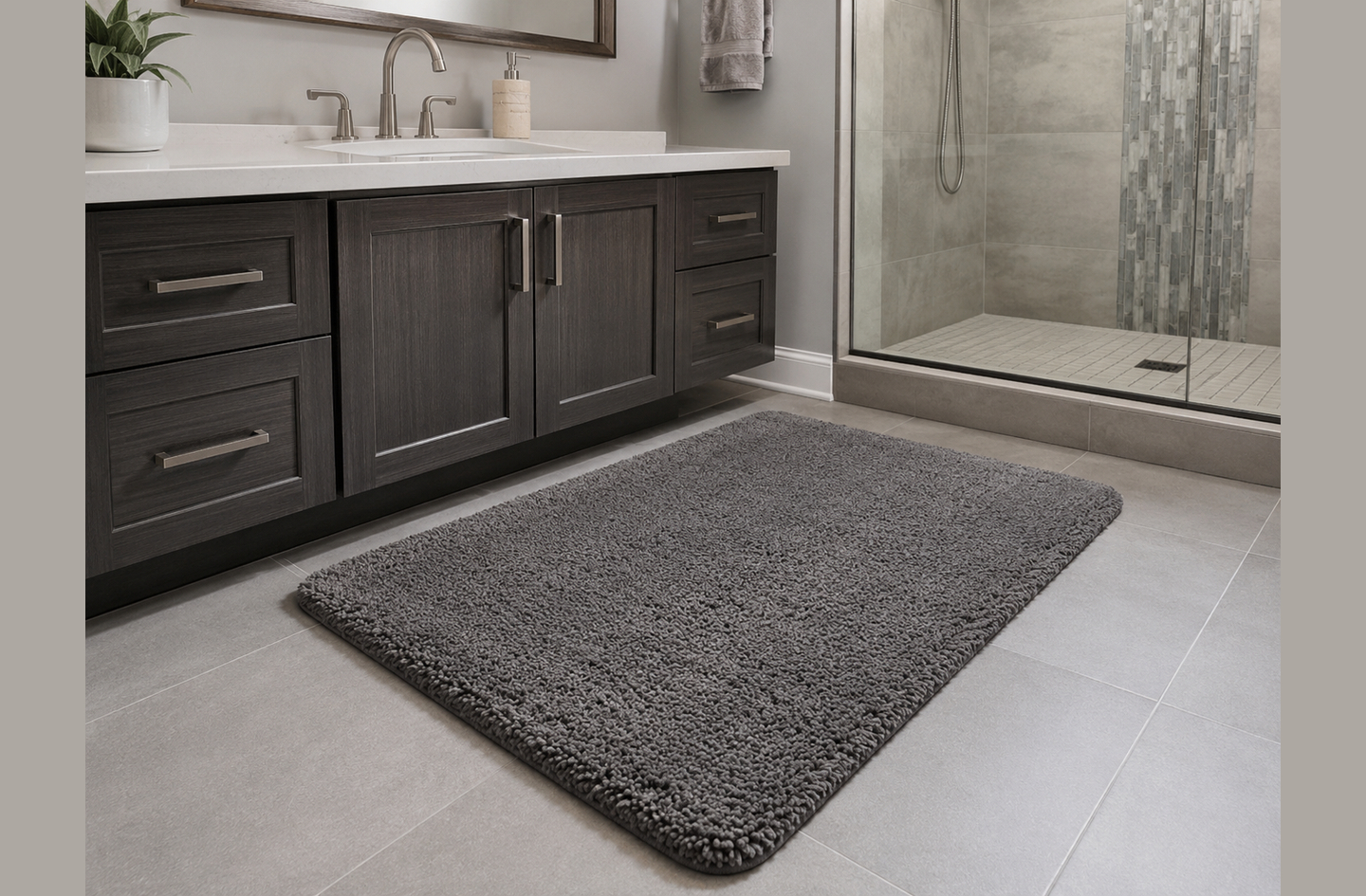
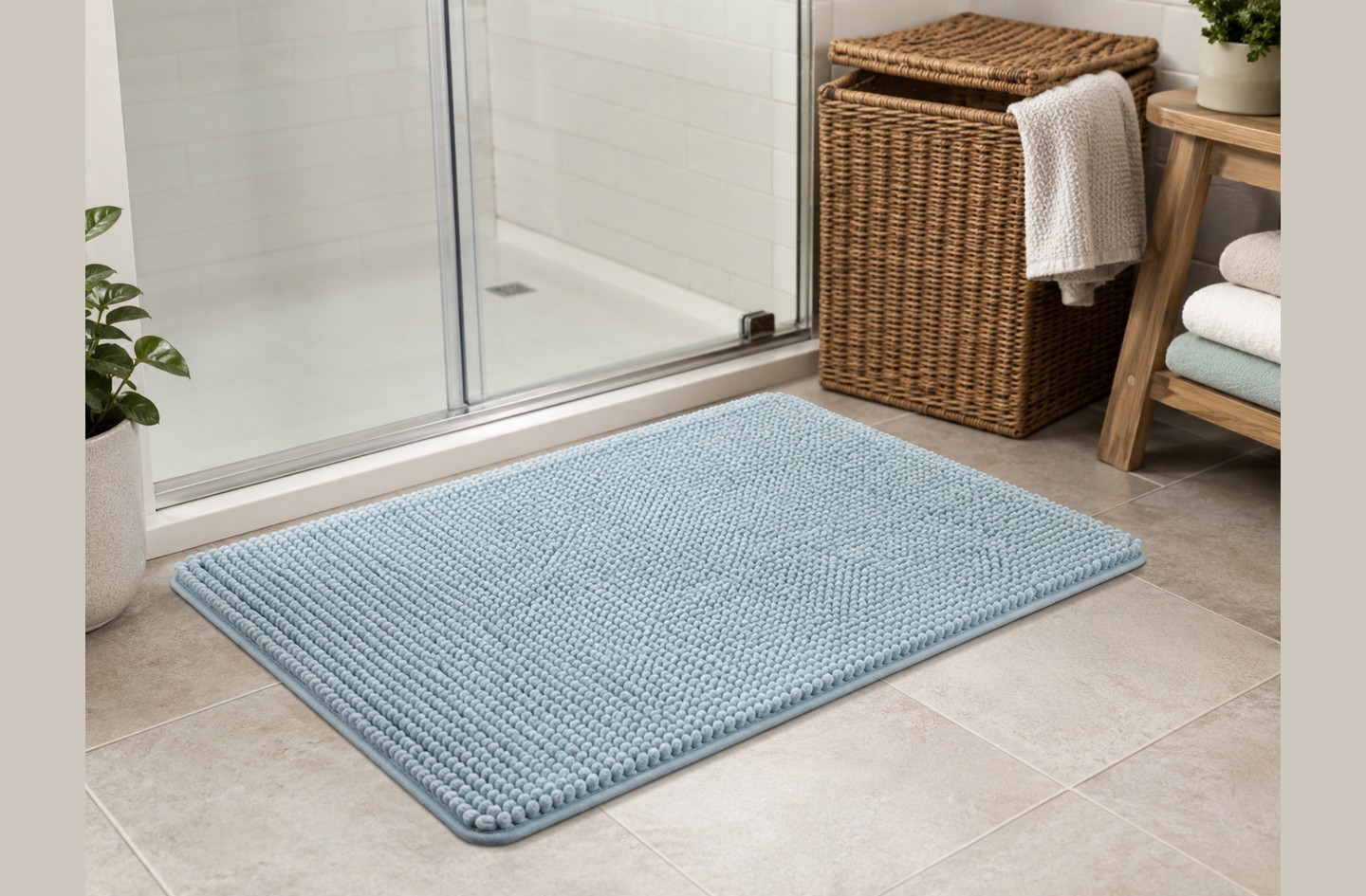
A mat covering only the center of the exit zone leaves the highest-risk foot placement (the first wet step out of the tub) on bare tile. Measure the full area you want to cover, including the turning space where someone pivots toward a towel bar or sink. For detailed guidance on mat selection by grip, fit, drainage, and edge profile, the non-slip bath mat selection guide covers each criterion for wet-zone placement.
Place mats without folded edges or thickness changes at their perimeter. A mat adding a visible edge in a narrow bathroom path creates a tripping hazard at the same location where a fall risk exists.
Mats are the fastest, most reversible option for immediate risk reduction in a high-frequency wet zone, but their backing condition degrades over time and a mat with worn or compressed backing offers little more than a dry mat placed on a slippery floor.
Step 3: Apply Traction Strips at Wet-Zone Transitions
Traction strips address a different risk point: the transition moment. A person stepping from a tub floor onto a bath mat passes through an instant when one foot is on one surface and the other is on a different one. The tub floor edge, a shower threshold, and a step-down at a doorway are where that moment happens most often.
Traction strips are adhesive-backed bands of rubber, silicone, or abrasive grit applied directly to a limited area of a floor surface to concentrate high friction at a specific transition zone. They do not cover the full floor; they add grip precisely where the surface change is sharpest.
Where to place traction strips
Place strips along the front edge of a tub floor where the first exiting foot lands. Apply them on a shower curb or threshold where the step-down is small but the wet foot contacts a narrow tile edge. Add strips at any transition where the floor material changes from tile to a different surface. In a multi-level home with tile meeting a stair nosing, strips at the nosing edge address a high-consequence transition point.
Application and maintenance
Clean and dry the surface completely before applying any strip. Soap film or moisture under the adhesive leads to early lifting. Peel the backing and press firmly from one end to the other, working out air pockets as you go. Most products require 24-48 hours of cure time before foot traffic. Replace strips every one to three years, or sooner in a high-traffic shower entry where repeated wet and dry cycles weaken adhesive bond. A lifted edge is itself a tripping hazard and signals time for replacement regardless of overall schedule.
Traction strips work well alongside secured mats, since each addresses a different location in the wet route. For comparison of anti-slip bathroom rugs and how their backing and edge profiles interact with tile surfaces, the anti-slip bathroom rugs guide covers backing grip, edge stability, and fit by tile type.
Strips are the most targeted intervention available for a specific transition point and cost far less than a surface treatment, but they are not a substitute for whole-floor friction improvement when the issue is across the entire bathroom surface.
Step 4: Apply an Anti-Slip Surface Treatment
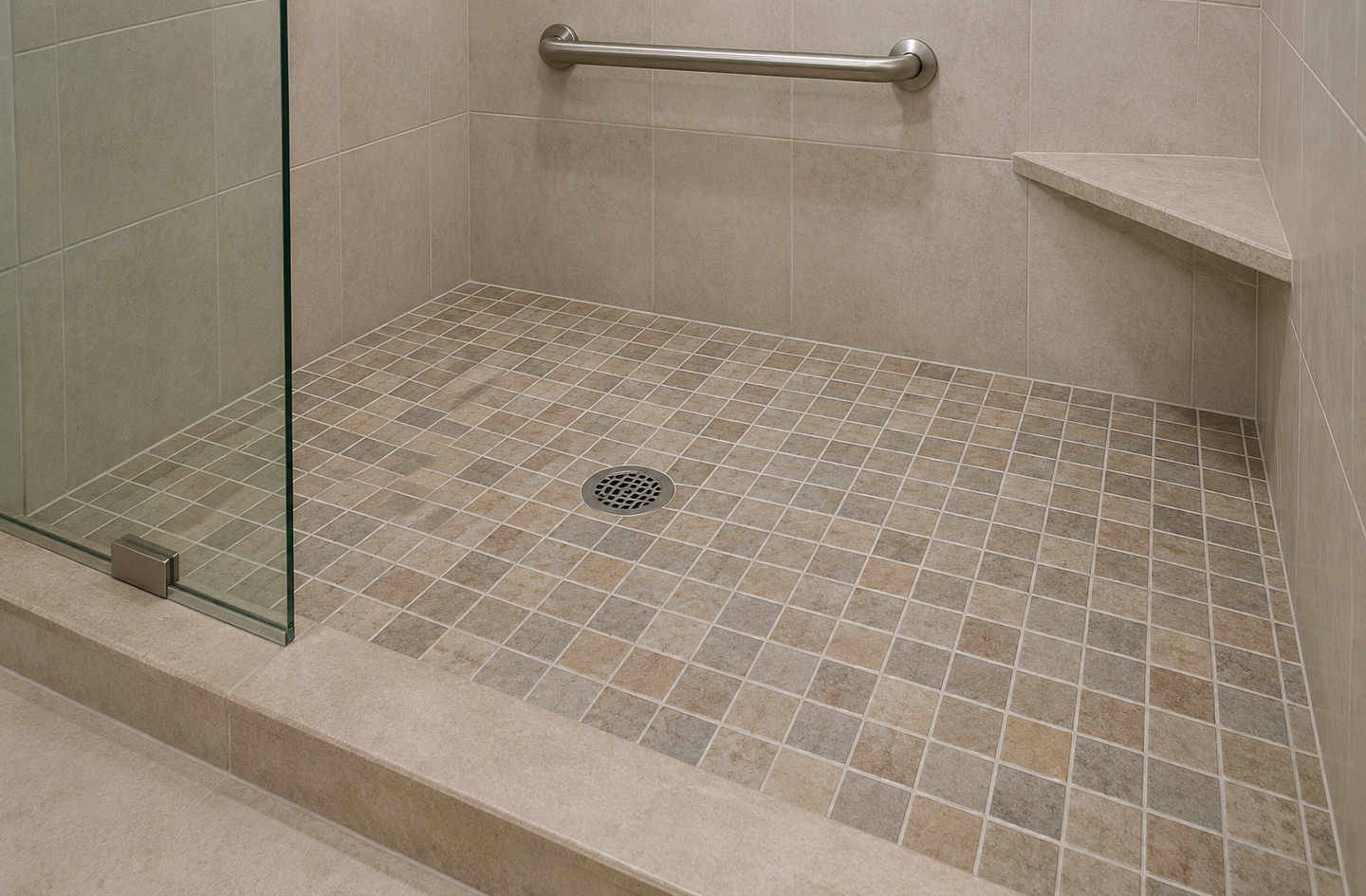
A surface treatment changes the tile itself, adding friction without anything placed on top of the floor. This approach is most relevant for smooth, glazed tile where the tile’s own surface offers minimal grip in wet conditions. Two types are available for residential use.
Chemical etching treatments
Chemical etching is a treatment applied to a tile surface where a mild acid reaction opens microscopic channels or pores in the glaze, creating more contact points for a shoe sole without changing the visible appearance of the floor or altering the cleaning routine. Most products are applied by mopping the solution onto a clean, dry surface, allowing it to dwell for a specified time, then rinsing thoroughly. The result is permanent for the tile’s surface texture, though the treatment does not prevent future contamination buildup.
Polymer-based coatings
Polymer-based anti-slip coatings apply a thin film containing anti-slip particles or texturing agents. Unlike etching, coatings leave a surface deposit that wears with foot traffic and requires reapplication every two to four years. Coatings work on surfaces where chemical etching produces limited results, including certain types of natural stone and sealed or epoxy-coated grout.
What to realistically expect from surface treatment
A well-applied chemical etch on glazed ceramic tile typically raises the measured DCOF by 0.05 to 0.15 points. For a tile testing at 0.38 DCOF when wet (below the 0.42 threshold), a 0.10 improvement pushes the surface above the minimum threshold. Results depend on the tile’s existing surface composition. A polished tile with a dense, low-porosity glaze responds less to etching than a standard satin-finish tile. Neither etching nor coating lasts indefinitely in a bathroom used daily.
An occupational therapist or licensed contractor can assess your specific floor and advise which product type fits the tile’s composition. If you are managing a floor for a specific person’s balance or mobility situation, that consultation is worth the investment before choosing a product and applying it.
Surface treatment is the only approach in this guide that addresses the tile’s baseline friction rather than compensating for it, which makes it the right choice for smooth glazed tile in a high-use wet zone where mats and strips alone leave the underlying surface unchanged.
How to Make Tile Floor Less Slippery: Comparing the Four Approaches
Each approach solves a different part of the problem at a different cost and commitment. The table below reflects typical residential bathroom conditions; results vary with tile type, usage frequency, and water chemistry.
| Approach | Typical cost (DIY) | Duration | Reversible? | Addresses baseline texture? | Best use |
|---|---|---|---|---|---|
| Deep cleaning | Low (materials only) | Ongoing, every 2-4 weeks | N/A | No (removes contamination only) | First step for any floor before other measures |
| Anti-slip mat | Low ($15-$60) | 1-3 years before backing wears | Yes | No | Tub/shower exit and in-zone wet coverage |
| Traction strips | Low ($10-$30 per zone) | 1-3 years before adhesive degrades | Partial (adhesive residue) | No | Threshold edges and step transitions |
| Surface treatment | Medium ($30-$80 per application) | 2-4 years, then reapply | No (etching is permanent) | Yes | Glazed or polished tile with inadequate baseline friction |
The non-slip bathroom flooring comparison guide covers how different flooring materials compare on wet traction if you are also weighing whether to stay with tile or choose a different surface type altogether: non-slip bathroom flooring options.
When Replacement Becomes the More Durable Fix
The four approaches above address tile floors where the surface and structure are intact. Replacement enters the conversation when the tile itself has deteriorated past the point where treatment or coverings provide a durable long-term answer.
Signals that suggest replacement over treatment
A tile with a visibly worn, polished surface (often seen in high-traffic bathrooms where years of foot traffic have buffed the glaze smooth) may test below 0.42 DCOF even when clean and wet. If two or three rounds of surface treatment have not produced a lasting friction improvement, the tile’s texture may no longer have the porosity the treatment chemistry needs to bond to. Replacement replaces that substrate.
Grout lines that are crumbling, missing, or significantly lower than the tile face create a pattern of small height changes across the floor. These height changes are a tripping hazard, and they affect mat placement and traction strip adhesion. Regrouting is a lower-cost option than full replacement and addresses this specific problem; a licensed contractor can assess whether regrouting alone suffices or whether the substrate under the tile is also failing.
When to bring in a professional assessment
A home visit from an occupational therapist or an accessibility specialist provides a different lens than any product decision. Over 14 million older adults report a fall each year,2 and the healthcare cost of nonfatal older adult falls reached $80 billion annually as of 2024.3 For a specific person with balance, strength, or vision changes, a professional assessment of the full bathroom route, not just the tile, produces a more accurate priority list than a general guide. The floor is one friction point in a route that also includes the toilet transfer, the shower entry, and the lighting between the bed and the bathroom at night.
Replacement is not the first answer; it is the answer when the tile’s structure or texture is the source of the problem and non-replacement approaches have a demonstrably shorter service life than the residency they are protecting.
Frequently Asked Questions
How often do anti-slip tile treatments need to be reapplied?
In a bathroom used daily, plan to reapply most treatments every two to four years. Chemical etching is permanent at the surface texture level, but the opened pores fill with mineral deposits over time and the friction improvement diminishes. The water bead test (water beads up on clean tile, spreads flat on contaminated tile) is a practical check between scheduled applications.
Does grout condition affect how slippery a tile floor is?
Yes. Grout holds more soap and mineral buildup than tile faces because grout is porous. Crumbling or missing grout also creates small height changes across the floor surface that affect where a mat lies flat and how well adhesive strips bond. Regrouting is worth doing before applying any surface treatment, since a treatment applied over failing grout seals in a structural problem.
What is DCOF and how do I know if my tile meets the standard?
DCOF (Dynamic Coefficient of Friction) measures the resistance a floor surface offers to a shoe in motion across it. ANSI A326.3 sets 0.42 as the minimum for wet interior pedestrian use.5 A certified measurement on your specific floor requires a tribometer device and takes roughly 30 minutes per room; a flooring contractor or accessibility specialist familiar with ANSI A326.3 testing handles this assessment.
Does tile size or texture affect slip risk?
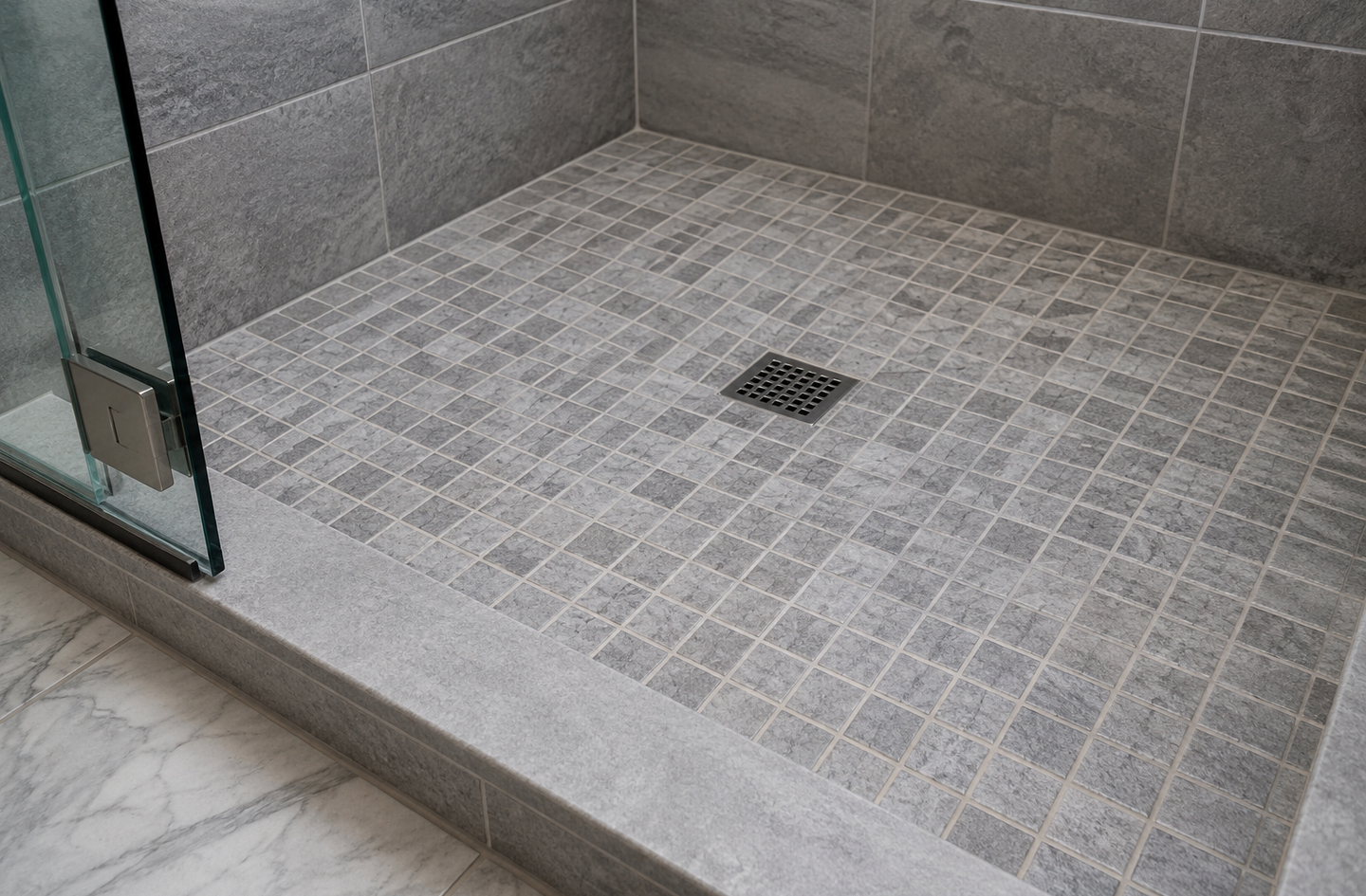
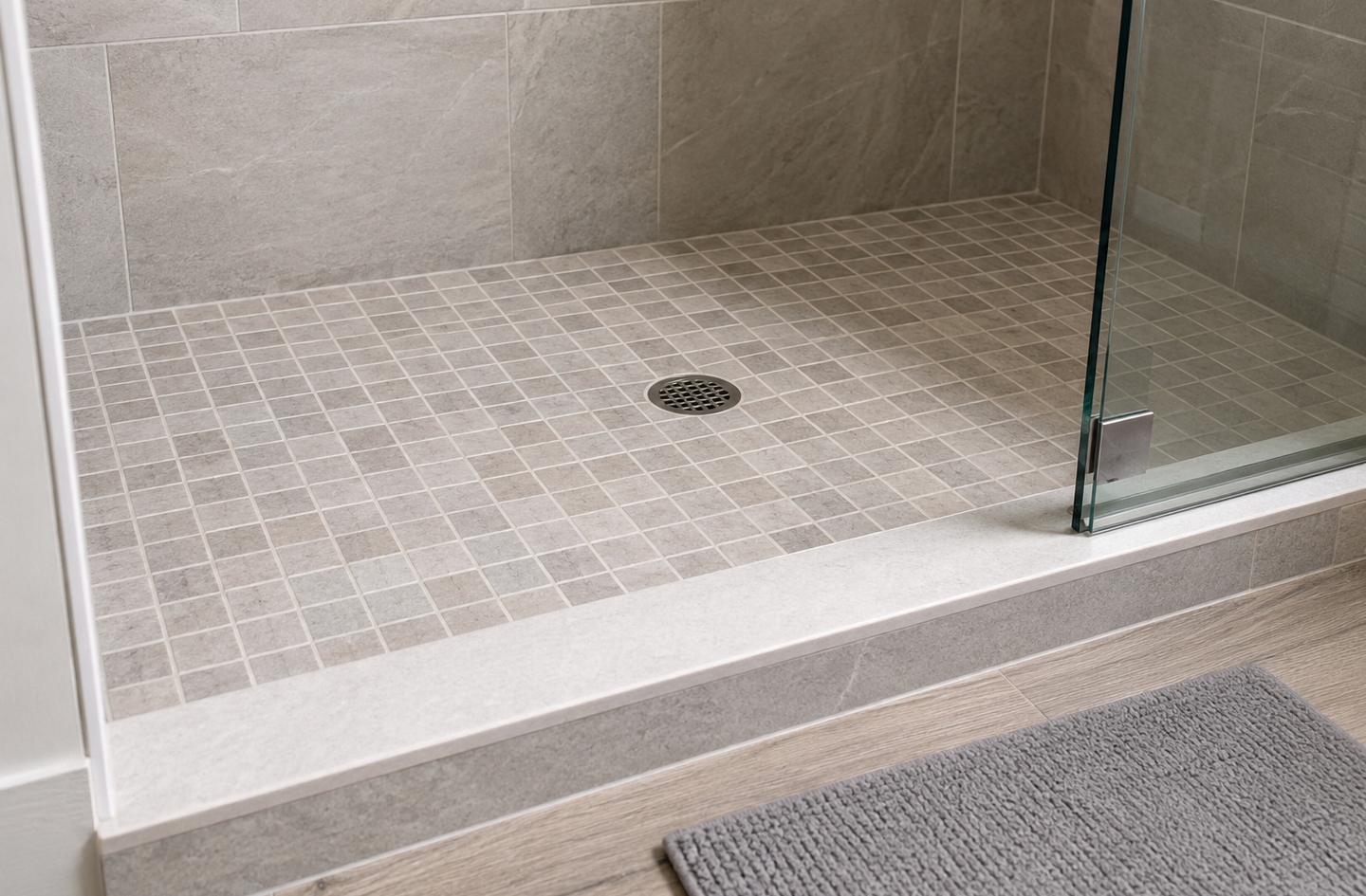
Yes. Larger tiles with fewer grout lines have less edge texture than mosaic patterns and tend to hold less water in grout channels. High-gloss glazed tile starts with a lower dry DCOF than unglazed or satin-finish tile. After deep cleaning removes contamination, tile texture is the primary factor determining whether cleaning alone is sufficient or a surface treatment is needed to reach the 0.42 threshold when wet.
Can traction strips and anti-slip mats be used together?
Yes, and combining them addresses different parts of the wet route. Traction strips handle transitions where a single foot contact changes surfaces (tub edge, shower threshold, step nosing). Mats cover the full exit zone where a wet bare foot stands and turns. Each approach targets a different risk location and neither substitutes for the other in its zone.
Limitations and Edge Cases
- The friction data referenced here is from U.S. and international research on indoor ceramic and porcelain tile; outdoor tile, natural stone with variable porosity, and specialty surfaces (epoxy coatings, resin floors) may respond differently to the same treatments.
- Heated tile floors (radiant in-floor systems) require verifying that any chemical etching or coating product is rated for the operating temperature range before application.
- For a specific person with documented balance, gait, or mobility changes, the approaches here provide a starting framework; a licensed occupational therapist assessing the specific home and person produces a more accurate priority sequence than any general guide.
References
Methodology: every figure below comes from an independently published source verified live before publication; research was gathered and cross-checked before drafting following Home Age Fit’s engineering-informed editorial methodology.
- CDC MMWR – Nonfatal Bathroom Injuries Among Persons Aged 15 Years – United States, 2008. Morbidity and Mortality Weekly Report, Vol. 60, No. 22, June 2011.
- CDC – Centers for Disease Control and Prevention – Facts About Older Adult Falls. National Center for Injury Prevention and Control, 2025.
- NCOA – National Council on Aging – Get the Facts on Falls Prevention. 2024, citing Injury Prevention study.
- PLOS ONE – Development and Validation of the TexCoMP Model: A Nonlinear Framework for Optimising Slip-Resistant Walkway Coatings in Diverse Environments. In-Ju Kim. 2026.
- Crossville, Inc. – Slip Resistance of Porcelain Tile Floors and DCOF Explained. Referencing ANSI A326.3 Dynamic Coefficient of Friction standard. 2022.
Conclusion
Making tile floors less slippery starts with removing the contamination layer causing most of the friction loss. Deep cleaning, secured mats, traction strips, and surface treatments address different parts of the problem at different costs and durability levels. Using more than one approach is appropriate for floors serving high-frequency wet zones. Replacement enters the picture when the tile’s own texture, not the contamination, is the limiting factor.
For the full picture of how flooring material choices affect wet-zone safety, see the overview in slip-resistant flooring for how this fits the wider topic of safer home surfaces.