Falls are among the leading causes of injury for adults 65 and older, sending 3 million people to emergency departments each year in the United States alone.1 Yet most home fall risk is addressable – the challenge is knowing where to start. Fall-prevention priorities are the structured decisions seniors and caregivers make about which hazards to fix first, using a framework based on consequence, exposure, and ease of correction. This guide covers the full system: hazard assessment, room-by-room risk, sequencing, equipment, daily habits, and when to bring in qualified professionals.
Quick Answer
What is Fall-Prevention Priorities?
A fall-prevention priority system is a structured approach to ranking home fall hazards by consequence and daily exposure, then acting on the highest-urgency items first. One in four adults 65 and older falls each year in the United States,1 and a prioritized approach consistently outperforms single-fix or reactive responses by addressing the most dangerous friction points before injury occurs.
Why it matters:
Falls are not random events. They emerge from the interaction of the home environment, daily routes, physical capacity, and lighting. Identifying and ranking the highest-consequence friction points – rather than reacting to whichever hazard is most visible – is what a priority-based system provides.
Key Takeaways
- One in four adults 65 and older falls each year in the United States; 38,000 of those falls were fatal in 2021.1
- 20 to 30% of older adults who fall sustain moderate to severe injuries, including hip fractures and head trauma.2
- Individuals who fall once face double the risk of a subsequent fall, making fast action after a first fall especially important.1
- Bathrooms and stairs carry the highest fall consequence and are the standard first-priority areas in any home assessment.
- Most home falls result from accumulated small frictions, not a single dramatic hazard – which is exactly what a priority framework is designed to address.
Fall-Prevention Priorities in 30 Seconds
| If you are… | Do this |
|---|---|
| Just starting a home safety review | Begin with the bathroom and stairs; those two areas carry the highest injury consequence. |
| A caregiver assessing a parent’s home | Walk every daily route first, then score hazards by frequency, consequence, and ease of correction. |
| An older adult living alone | Prioritize nighttime lighting on the bedroom-to-bathroom route, transfer supports, and reliable emergency communication. |
| Planning a structural modification | Address permanent changes (stair railings, bathroom grab bars) with a licensed contractor; get person-specific placement guidance from an occupational therapist. |
| Working on a limited budget | Start with the high-impact, low-cost group: motion-sensing night lights, rug anchoring, cleared walking paths, and reachable storage reorganization. |
What Is Fall-Prevention Priorities?
Fall-prevention priorities are a decision framework for identifying, ranking, and addressing home fall hazards in the order that reduces the most risk first. The framework treats the home as an interconnected system rather than a list of isolated items, recognizing that bathroom transfers, nighttime routes, stair handrails, kitchen carrying tasks, and threshold crossings each represent a distinct risk profile that must be evaluated on its own terms.
Priority-based planning differs from a standard home safety checklist in one key respect: it assigns a rank to each hazard based on four factors. The first is the consequence of a fall at that specific location – a fall in a wet shower carries a different injury probability than a trip on a living-room rug. The second is how frequently the person uses that location each day. The third is how difficult or costly the correction is. The fourth is the person’s current mobility, balance, and health status. A slippery bath mat in a bathroom used six times daily scores very differently from a loose rug in a rarely-visited guest room, even if both appear on the same generic safety checklist.
The framework applies to three main populations: older adults planning ahead while still fully independent, individuals who have experienced a first fall or near-fall and need to act quickly, and caregivers assessing a relative’s home from the outside. Each enters the system at a different point, but the core logic – assess, rank, sequence, correct, and review – is the same across all three situations.
Fall-prevention priorities are an educational framework for thinking more clearly about risk before engaging qualified professionals. They do not replace a home assessment by a licensed occupational therapist or a structural evaluation by a licensed contractor. They prepare the questions to bring to those conversations.
Why Fall-Prevention Priorities Matter
Falls carry significant consequences for older adults. In 2021, falls led to 38,000 deaths among adults 65 and older in the United States, and 3 million fall-related emergency department visits were recorded that same year.1 Non-fatal fall injury costs reached approximately $80 billion in 2020, a figure projected to exceed $101 billion by 2030.1 The WHO reports that 20 to 30% of older adults who fall sustain moderate to severe injuries, including bruises, hip fractures, and head trauma.2
The physiological consequence of a fall extends beyond the immediate injury. Individuals who fall once face double the risk of a subsequent fall,1 creating a cycle that a priority-based approach is specifically designed to interrupt before it begins. The most effective time to act is before the first fall, while the resident is still fully independent and can participate in all decisions.
Three reasons make the priority-based approach distinctly valuable:
- The home is not static. Lighting ages, furniture shifts, physical capacity changes with health events and medications, and seasonal light levels alter visibility on daily routes. A living priority system keeps pace with those changes; a one-time checklist does not.
- Highest-consequence hazards do not always announce themselves. A worn stair tread, inadequate transfer support at a toilet, or a threshold that breaks a walking stride may be unremarkable until they interact with fatigue, poor lighting, or a new medication. A scoring framework surfaces those intersections.
- Most falls are preventable without major renovation. Observation, sequencing, targeted correction, and habit adjustment address a large share of home fall risk without structural work. The CDC STEADI initiative formalizes this structured, multi-factor approach to fall risk identification.3
The 5-Part Fall-Prevention Priorities Framework
Fall-prevention priorities organize into five core dimensions that together account for the full scope of home fall risk: hazard assessment, room-by-room exposure, priority sequencing, support systems and equipment, and daily habits with ongoing review. Every major fall-prevention decision – what to observe, what to fix, what to buy, and how to sustain the result – maps into one of these five areas.
Dimension 1: Hazard Assessment – Know What to Rank
Fall-prevention work begins with observation, not renovation. A structured hazard assessment assigns each friction point a score based on four criteria: the severity of injury a fall at that location would likely cause, how frequently the resident uses that location daily, how obvious the hazard is to the resident, and how quickly and inexpensively it can be corrected. Bathrooms and stairs typically score highest on severity. Routes used more than four times daily score highest on exposure frequency. Together, those two scores define where to act first. The NIH National Institute on Aging identifies intrinsic risk factors (balance, vision, medication side effects) and extrinsic risk factors (home hazards, lighting, footwear) as the two categories any structured assessment must cover.4 An effective hazard assessment addresses both categories simultaneously.
Deeper read: Senior Home Safety Audit: Rank Fall Hazards by Urgency.
Deeper read: Home Fall Prevention: How to Decide What to Fix First.
Deeper read: Senior Safety at Home: The Fall Risks to Fix First.
Dimension 2: Room-by-Room Exposure – Where Risk Lives
No two rooms carry the same fall risk, and addressing them in the wrong order wastes both time and money. The bathroom is the most consistently high-consequence space because it combines wet surfaces, constrained turning area, and difficult transfers – toilet, shower entry, and shower wall – into a single, frequently used room. Stairs and level changes add the consequence of falls from height. The kitchen introduces carrying tasks near hot surfaces and reaching to overhead storage. Bedrooms carry nighttime transfer risk and the particular danger of rising quickly in low light. Hallways and entryways create trip hazards at thresholds and tight turning points. Mapping each room by its risk type and daily exposure frequency – rather than by floor plan sequence – is the core output of a room-by-room priority approach. The AHRQ notes that structured room-by-room fall assessment is a foundational step in clinical fall prevention protocols.5
Deeper read: Home Safety Checklist for Seniors: Room-by-Room Risks.
Deeper read: Home Safety for the Elderly: High-Risk Areas First.
Deeper read: Whole-Home Fall Prevention: Room-by-Room Priorities.
Deeper read: Kitchen Fall Prevention for Seniors: Key Safety Priorities.
Deeper read: Safe Steps for Seniors: Stairs and Threshold Fall Prevention.
Dimension 3: Priority Sequencing – What to Fix First
After hazards are identified and room exposure is mapped, the next step is sequencing corrections in the order that produces the highest risk reduction per unit of time and cost. The standard sequence starts with immediate, low-cost changes: clearing paths, securing rugs, improving lighting on the nighttime route, and relocating frequently used items within comfortable reach. These changes can typically be completed in a day and require no professional help. They are followed by targeted equipment additions (grab bars at the toilet and shower, improved stair handrails) and then by structural modifications that require a contractor’s timeline and building permits. A priority plan explicitly separates urgent fixes from planned improvements. Conflating those two categories is the most common sequencing error: it leads to deferred action on genuinely dangerous hazards while a renovation timeline is negotiated.
Deeper read: Fall Prevention Checklist for Home Safety: What Comes First.
Deeper read: Home Safety for Seniors: 10 Fall-Prevention Quick Wins.
Deeper read: Home Safety Modifications for Elderly Fall Prevention.
Deeper read: Fall Prevention for Seniors: A Priority-Based Home Plan.
Deeper read: Aging-in-Place Safety Checklist: Fall Risks to Address First.
Dimension 4: Support Systems and Equipment – What to Add and When
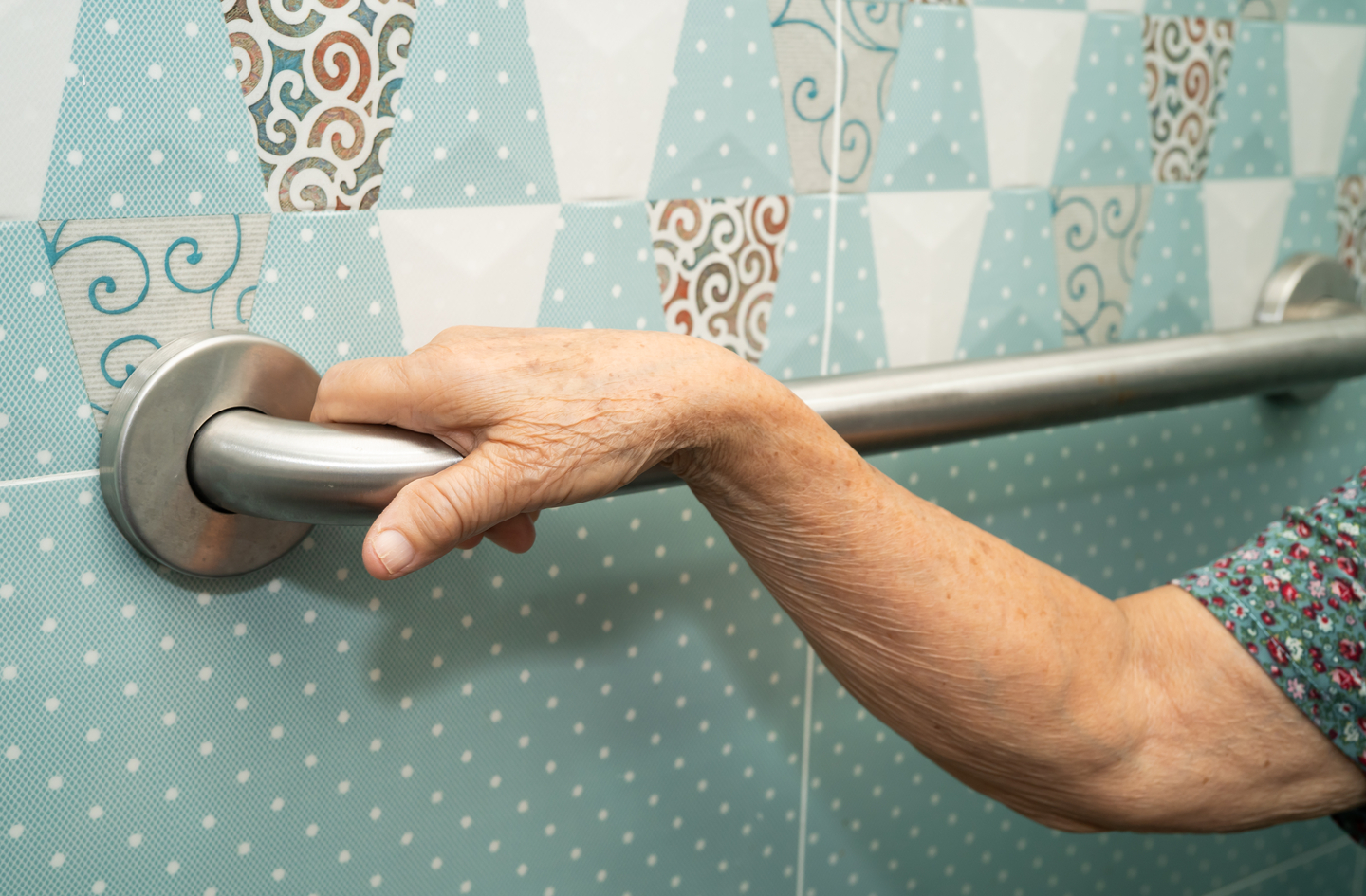
Grab bars, stair railings, raised toilet seats, bed transfer aids, and mobility devices each address a specific type of support gap. The priority logic for equipment mirrors the framework for environmental corrections: highest-consequence location first, then daily exposure frequency, then ease of installation. Bathroom grab bars at the shower entry, the shower wall, and the toilet transfer zone serve the highest-consequence space and are typically the first equipment additions in any priority plan. Double handrails on all stair runs address the consequence of height-related falls. Bed rails require careful evaluation because they can reduce transfer falls for some individuals while introducing entrapment or climbing hazards for others – a nuance a standard checklist frequently misses. Equipment selection that serves the specific person’s mobility, transfer pattern, and cognitive status produces better outcomes than a generic product list.
Deeper read: Home Safety Equipment for Seniors: What to Prioritize.
Deeper read: Bed Rails for Elderly Safety: Help or Added Fall Risk?.
Deeper read: Home Fall Prevention Checklist for Older Adults Living Alone.
Dimension 5: Daily Habits, Education, and Ongoing Review
A home assessment is a point-in-time snapshot. Physical capacity, medication regimens, vision, and daily routines change – and the fall-risk profile changes with them. Daily habits that consistently reduce fall risk include activating lighting before any nighttime movement, wearing non-slip footwear with proper heel support throughout the day, slowing transitions from sitting to standing, and planning a carrying path before lifting any object near a hot surface or at the top of stairs. Education for both the resident and any caregivers should begin with the highest-priority hazards identified in the assessment, not with a generic product overview. A structured re-assessment schedule – at minimum annually, and after any significant health change – converts a one-time safety review into a living program. Research indicates that hearing aids can reduce fall risk by approximately 50% among those with hearing loss, who otherwise face three times the fall risk of those without hearing impairment,1 underscoring that sensory factors belong in an ongoing review alongside environmental ones.
Deeper read: Senior Safe at Home: Daily Routines That Lower Fall Risk.
Deeper read: Fall Prevention Education at Home: What to Teach First.
Deeper read: Home Safety Checklist for Aging Parents: Caregiver Guide.
Deeper read: Senior Safe-at-Home Program: Build a Fall-Prevention Plan.
Deeper read: Home Safety Tips for Older Adults: Prevent Falls First.
How to Choose Where to Start
The most important decision criterion is consequence, not convenience. The correction that prevents a fall in the most-used, highest-consequence space matters more than the easiest correction to make. The following six-step sequence guides that decision.
- Map daily routes. Identify every path used between waking and sleeping: bedroom to bathroom, bedroom to kitchen, kitchen to seating area, and front entry to main living space. These are the candidate routes for urgent intervention.
- Score each route and room by consequence and exposure. Bathrooms score highest for consequence (wet surfaces plus transfers). Routes used more than four times daily score highest for exposure frequency. The bathroom on the nighttime route is typically the first combined score leader in most homes.
- Separate urgent from planned. Immediate hazards – a loose stair railing, a rug that bunches underfoot, a bathroom with no lighting switch reachable from the door – belong in the urgent category. Structural modifications requiring a contractor’s schedule belong in the planned category. Act on urgent items this week.
- Match correction type to hazard type. A slick floor requires a surface solution (bath mat with suction backing, non-slip tread strips). A transfer difficulty requires a support point (grab bar, transfer pole). A visibility gap requires light (motion-activated night light, higher-lumen bulb). Mismatching correction type to hazard type is a common error that wastes resources without reducing risk.
- Address urgent items first, then plan structural modifications. The goal is to reduce the highest-consequence friction points immediately – not to wait for a renovation timeline. In most homes, five to ten low-cost changes can be implemented before any contractor is engaged.
- Re-evaluate after any significant health change. A new medication, a change in vision, a recent hospitalization, or a reported near-fall shifts the priority ranking and warrants a fresh route walk and hazard scoring.
When structural corrections are required – permanent grab bar installation, stair railing replacement, bathroom floor resurfacing – engage a licensed contractor. For person-specific equipment placement that accounts for an individual’s exact mobility, balance, and transfer pattern, an in-home evaluation by a licensed occupational therapist provides guidance that no general article can replicate.
Compare All Priority Approaches by Location
| Criteria | Bathroom | Stairs & Thresholds | Kitchen | Bedroom | Hallways & Entry |
|---|---|---|---|---|---|
| Injury consequence | Very high | High | Moderate | Moderate | Moderate |
| Daily exposure | Very high | Varies by floor layout | High | High | High |
| Typical correction cost | $200 to $3,000 | $500 to $8,000 | $50 to $2,000 | $50 to $500 | $0 to $500 |
| DIY vs. professional | Mix (structural requires pro) | Structural: professional | Mix | Usually DIY | DIY to mix |
| Priority tier | 1 – Address first | 1 to 2 | 2 to 3 | 2 to 3 | 2 |
Start with the Bathroom if: any wet-surface hesitation, toilet transfer difficulty, or nighttime bathroom use without adequate lighting is present.
Start with Stairs and Thresholds if: multi-level living is required, stair lighting is poor, or any handrail is missing, loose, or below standard grip height.
Start with the Kitchen if: carrying tasks near hot surfaces, reaching to overhead storage, or prolonged standing while preparing meals produces hesitation or imbalance.
Start with the Bedroom if: nighttime transfers from the bed, bed-height mismatch, or a poorly lit path between the bed and the bathroom is present.
Start with Hallways and Entry if: the main daily circulation routes include unsecured rugs, inadequate night lighting, or thresholds that break a normal walking stride.
Deeper read: Home Safety for the Elderly: High-Risk Areas First.
Common Mistakes in Fall-Prevention Planning
Mistake 1: Starting with products instead of routes
Why it is a mistake: Purchasing grab bars, non-slip mats, and bed rails before observing where and when falls or near-falls actually occur produces a home full of safety equipment that does not address the actual friction points. The home looks safer without becoming meaningfully safer.
What to do instead: Walk the daily routes first. Mark every point where the resident grips furniture, turns, hesitates, or changes level. That map defines where support is needed, before any purchase is made.
Read more: Home Fall Prevention: How to Decide What to Fix First.
Mistake 2: Treating all hazards as equally urgent
Why it is a mistake: A loose rug on a daily-use hallway and a cosmetic crack in a rarely-visited guest room require very different levels of urgency. Treating them as identical leads to deferred action on genuinely dangerous hazards while lower-consequence items are addressed first.
What to do instead: Score each hazard by consequence and daily exposure. Fix the highest-scoring items first, regardless of how easy or inexpensive the lower-scoring items might be to correct.
Read more: Senior Home Safety Audit: Rank Fall Hazards by Urgency.
Mistake 3: Treating a one-time audit as an ongoing program
Why it is a mistake: Fall risk is not static. Medications change, physical strength shifts, and seasonal lighting differences alter the home’s risk profile. A single audit conducted once produces an outdated plan within months and misses the hazards that emerge from those changes.
What to do instead: Schedule a re-assessment at minimum annually and immediately after any significant health event, medication change, or mobility shift. Build the re-assessment into the household calendar rather than treating it as a one-time task.
Read more: Senior Safe-at-Home Program: Build a Fall-Prevention Plan.
Mistake 4: Skipping professional assessment for structural modifications
Why it is a mistake: Incorrectly installed grab bars anchored to drywall instead of studs, railings at the wrong height, or ramps built at the wrong slope can fail under load, causing rather than preventing falls. Some structural changes also require permits.
What to do instead: Engage a licensed contractor for any permanent structural modification. For person-specific equipment placement (grab bar height, transfer pole positioning, ramp angle), an in-home evaluation by a licensed occupational therapist produces placement guidance matched to the individual’s specific mobility and transfer pattern.
Read more: Home Safety Modifications for Elderly Fall Prevention.
Mistake 5: Ignoring equipment trade-offs
Why it is a mistake: Some safety equipment introduces secondary risks. Bed rails, for example, can reduce transfer falls for some individuals while creating entrapment or climbing hazards for others. No piece of safety equipment is universally beneficial across all users.
What to do instead: Evaluate each equipment choice against the specific person’s mobility, cognition, and daily use patterns rather than defaulting to a product that appears on a generic safety list. An occupational therapist can assess equipment fit for a specific individual in their specific home.
Read more: Bed Rails for Elderly Safety: Help or Added Fall Risk?.
Best Fall-Prevention Priorities by Use Case
Best for Seniors Planning Ahead While Independent
Prioritize observation over renovation. The highest-leverage changes at this stage are typically environmental: better night lighting on the bedroom-to-bathroom route, secured rugs and cleared walking paths, and frequently used items reorganized to comfortable reach height. These changes require no professional help, no structural work, and no significant expense. The goal is to reduce cumulative friction before any single event makes the issue urgent.
Deeper read: Home Safety Tips for Older Adults: Prevent Falls First.
Best for Seniors Who Have Experienced a First Fall
Act on the highest-consequence friction points immediately. Individuals who fall once face double the risk of a subsequent fall, so completing a full room-by-room assessment within two weeks of a first fall is appropriate. A physical therapist or occupational therapist referral for balance and home-environment evaluation is also advisable following any fall that caused injury or significant concern.
Deeper read: Fall Prevention Checklist for Home Safety: What Comes First.
Best for Adult Children Assessing a Parent’s Home
Walk every route the parent uses daily. Ask specifically about near-misses, not only falls – near-misses are the more reliable early indicator. Pay particular attention to the bathroom, the nighttime path from the bedroom, and any stairs. The caregiver’s role is to produce a prioritized action list that the parent participates in deciding, not a list of mandated changes that bypass the parent’s autonomy and judgment.
Deeper read: Home Safety Checklist for Aging Parents: Caregiver Guide.
Best for Older Adults Living Alone
Prioritize two things above all others: reducing fall risk in the highest-consequence locations and establishing reliable emergency communication if a fall does occur. A personal emergency response device and a clear protocol for reaching help should be in place before large-scale home modifications begin. Daily route planning and consistent footwear habits are the other high-leverage starting points.
Deeper read: Home Fall Prevention Checklist for Older Adults Living Alone.
Best for Those on a Limited Modification Budget
Focus first on the high-impact, low-cost group: motion-sensing night lights on nighttime routes, rug anchoring on all daily-use rugs, cleared walking paths on the primary circulation routes, reachable storage reorganized to waist height, and handrail condition checked on every stair run. These changes address the most common friction patterns without requiring professional help or structural work.
Deeper read: Home Safety for Seniors: 10 Fall-Prevention Quick Wins.
Frequently Asked Questions
What is the difference between a fall-prevention priority system and a home safety checklist?
A checklist identifies which hazards are present. A priority system ranks those hazards by consequence and daily exposure, then sequences corrections so the most protective changes happen first. The priority system answers not just what to fix, but which fix matters most and in what order – a distinction that becomes critical when time or budget is limited.
Which area of the home carries the highest fall risk for older adults?
The bathroom is consistently the highest-consequence fall location due to wet surfaces, constrained turning space, and the difficulty of toilet and shower transfers. Falls there carry a high rate of serious injury: 20 to 30% of older adults who fall sustain moderate to severe injuries, including hip fractures and head trauma.2 Bathroom priority is standard across all structured fall-assessment frameworks.
How often should a home fall-risk assessment be repeated?
At minimum annually, and immediately after any significant health change, new medication, hospitalization, or reported near-fall. Fall risk is not static: physical capacity, vision, balance, and medication side effects shift the home’s risk profile, and an assessment conducted once becomes outdated within months as conditions change.4
Do hearing aids actually reduce fall risk?
Research indicates that hearing aids can reduce fall risk by approximately 50% among older adults with hearing loss, who otherwise face three times the fall risk of those without hearing impairment.1 The likely mechanism is that hearing supports spatial orientation and balance feedback, particularly in low-light conditions or on unfamiliar surfaces.
What should caregivers address first when assessing a parent’s home for fall risk?
Walk every daily route the parent uses – from bedroom to bathroom, kitchen to seating area, and entry to main living space. Mark every point where the parent grips furniture, hesitates, or changes level. The bathroom and the nighttime path to the bathroom are typically the first two areas to address, in that order.5
What This Hub Does Not Cover
- Person-specific occupational therapy assessment – for a specific individual’s balance, strength, vision, or transfer situation, a licensed occupational therapist provides evaluation this hub cannot replicate.
- Certified structural engineering or code-compliance approval – permanent modifications require a licensed contractor and, where applicable, local building department review.
- Medical advice about fall risk factors related to medications, chronic conditions, or vision changes – those decisions belong with the individual’s physician or care team.
- Rental and apartment-specific modification rules – the applicable lease or building management policy governs what permanent modifications are permitted in those settings.
References
- National Council on Aging – Get the Facts on Falls Prevention (May 2025): statistics on fall frequency, deaths, emergency department visits, costs, subsequent fall risk, and hearing-related fall risk.
- World Health Organization – Falls Fact Sheet: 20-30% injury severity rate among older adults who fall, including hip fractures and head trauma.
- Centers for Disease Control and Prevention – STEADI: Stopping Elderly Accidents, Deaths and Injuries – clinical fall risk screening and intervention framework.
- National Institute on Aging – Falls and Fractures in Older Adults: Causes and Prevention – intrinsic and extrinsic fall risk factor categories and reassessment guidance.
- Agency for Healthcare Research and Quality – Falls: Patient Safety Primer – structured room-by-room and route-based fall risk assessment methodology.
Next Read
Fall-prevention priorities are a decision framework, not a product list. The most important first step is the same in almost every home: walk the daily routes, mark every friction point, and act on the bathroom and the nighttime circulation path before anything else. The scoring method in the How to Choose section converts that observation into a ranked action list that can guide both immediate fixes and longer-term planning.
Use the six-step scoring method to build a priority action list for your home.