Falls rarely begin with a single obvious hazard. In 2024, fall-related deaths among Americans 65 and older reached 43,020, making unintentional falls the leading cause of injury death in that age group.1 Yet most households begin their fall prevention work by buying a product. The more effective path starts with a teaching sequence: understanding who is at risk, why the risk exists, and which changes to address in which order. This spoke covers what patient education on fall prevention at home should teach first, building on the planning overview in Fall-Prevention Priorities: A Practical Guide to Safer Aging at Home.
Quick Answer
What should patient education on fall prevention at home teach first?
Start with a risk inventory and route observation before making any physical changes. A 2024 JAMA systematic review found that 27.5% of community-dwelling adults 65 and older fall each year,3 and most falls involve multiple overlapping risk factors. Teaching seniors and caregivers to map those factors, then address footwear and medications before structural modifications, produces a more effective and ordered intervention than leading with products.
Key Takeaways
- Over 14 million older Americans fall each year; falling once doubles the risk of falling again (NCOA, 2025).2
- Adults 75 and older take an average of 2.2 fall-risk-increasing medications, making medication review one of the highest-leverage early steps.3
- 83% of older adults in one clinical study wore improperly fitted shoes, a modifiable risk often correctable before any home renovation begins.4
- Occupational-therapist-led home hazard reduction for high-risk individuals can lower falls by an estimated 38%.5
- Teaching the education sequence in the right order means the household understands real friction points before a contractor is called.
Why the Order of Teaching Matters
Seniors rarely fall because of a single, obvious hazard. Risk accumulates: a slightly uneven floor, lighting that fades at a threshold, a threshold that breaks a walking stride, a medication that causes postural dizziness in the morning. The National Council on Aging reported in May 2025 that over 14 million older Americans experience a fall each year,2 and that falling once doubles the probability of falling again. Each fall increases the likelihood of the next, which means the most valuable educational window is the one before the first serious fall occurs.
The order of teaching shapes outcomes because it determines what gets attention and what gets skipped. When fall prevention education leads with products, such as grab bars, non-slip mats, or raised toilet seats, the underlying risk profile often goes unexamined. A grab bar in the shower is genuinely useful when the bathroom route has been mapped and the specific transfer points identified. Installed without that foundation, it addresses one symptom without touching the system.
This spoke outlines a six-step teaching sequence aligned with a systems-over-symptoms approach. The steps are ordered by what can be learned and acted on with the lowest effort and highest return. None of these steps requires a licensed professional at the outset, though step six explains clearly when one is needed.
Step 1: Build a Risk Inventory Before Buying Anything
By the end of this step, the household has a written record of the specific factors that increase fall risk for this person in this home. That record is the foundation that every subsequent decision rests on.
What belongs in a home fall risk inventory
A useful risk inventory covers five domains: fall history, physical factors, medications, sensory changes, and home conditions. Fall history is the single strongest predictor. A 2024 JAMA systematic review found that 27.5% of community-dwelling adults 65 and older reported a fall in the prior year,3 and prior fall is among the highest-weighted predictors of future falls in clinical screening tools. If the senior has fallen within the last twelve months, that fact alone changes the urgency and depth of every subsequent step.
Physical factors include lower body strength, balance and gait, and the presence of conditions that affect coordination or reaction time. These are not assessed here for clinical purposes; they are noted as planning context. Someone with known balance impairment needs a different home configuration than someone whose primary risk is environmental. The inventory is not a diagnosis; it is a planning input that shapes the route observation in step two.
How to document fall history without creating anxiety
For many seniors, the topic of falls carries social weight. Acknowledging multiple falls can feel like admitting a broader decline, which is why many do not report falls to their doctors. The NCOA noted in 2025 that fewer than half of older adults who fall tell their physician.2 A useful framing for the conversation: falls are a systems feedback signal, not a character judgment. The home produced conditions that allowed the fall to occur. The inventory is about understanding those conditions.
Document three things for each fall: where it happened, what the person was doing, and what time of day. These details reveal patterns. Most falls occur during transitions, such as moving from bed to standing, from sitting to walking, or entering and leaving the shower. They cluster in the morning, when postural hypotension from medications may be present, and in high-traffic rooms that have limited support points nearby.
What to add about sensory changes
Vision and hearing both affect fall risk in ways that are easy to overlook during a product-focused conversation. The NCOA’s 2025 data indicates that hearing loss increases fall risk nearly threefold, while hearing aids reduce risk by approximately 50%.2 Vision loss is associated with nearly double the fall risk. These figures suggest that sensory health belongs in a fall risk inventory alongside medications and home conditions, not treated as a separate medical matter outside the household’s planning scope. Noting current correction (glasses, hearing aids) and whether they are worn consistently at home is a useful starting point.
Step 2: Walk the Routes and Map Friction Points
Route observation is the single most information-dense step in home fall prevention education. Conducted before any modifications, it reveals what the home is actually asking the body to do along the paths used most often.
The five routes to walk first
Not every room carries the same risk. Fall risk is heaviest along the routes used most often, most urgently (the bathroom at 2 a.m.), and at the greatest level of fatigue (returning to the bedroom after a meal). The five highest-priority routes are: bedroom to bathroom, bedroom to kitchen, entry to main living space, kitchen to seating area, and any route involving a staircase. Walk each one slowly, ideally at the time of day the senior normally uses it.
On each route, mark every point where the person grips something, hesitates, changes speed, changes level, or reaches. These are the friction points. They signal where the body is already compensating for a gap in support, visibility, or surface stability. A friction point is far more actionable than a generic room-by-room safety checklist because it is specific to this person’s movement patterns in this home.
What to record at each friction point
For each marked friction point, record four things: the surface underfoot, the lighting level, whether a stable support structure is within arm’s reach, and whether a threshold or level change is present. These four factors account for the mechanical conditions behind most falls. Poor lighting and absent support points together compound risk far more than either would alone. Research published in a peer-reviewed scoping review found that occupational-therapist-led home hazard reduction programs, delivered to high-risk individuals, can lower falls by an estimated 38%,5 and much of that reduction comes from identifying and correcting exactly these friction-point conditions.
One non-obvious friction sequence: the path between the bed and the bathroom light switch, navigated in partial darkness after waking. Reaching for a switch that requires a step and a turn is a genuine transfer sequence. Many people navigate it on muscle memory alone, which works until it does not. Noting it in the route walk costs nothing and often leads to one of the simplest improvements: a nightlight, a motion-activated switch, or a bedside lamp within arm’s reach without standing.
How to include both the senior and the caregiver in the route walk
The route walk is most useful when both the senior and the caregiver complete it together. The senior knows where they hesitate or grip; the caregiver notices patterns the senior may have normalized. Walking the bedroom-to-bathroom route together at the actual time it is used (not during a midday inspection) reveals lighting conditions and fatigue levels that a daytime walkthrough misses. The observation is collaborative, not supervisory. The senior’s first-hand experience of which transitions feel effortful is the primary data source; the caregiver’s role is to record and notice, not to assess or judge.
Step 3: Teach Safe Movement Before Modifying the Space
Safe movement habits reduce fall risk regardless of the home environment. Teaching them before making structural changes means the resident arrives at step four with a better-calibrated sense of where physical modifications are genuinely necessary versus where a behavioral change is sufficient.
The sit-to-stand sequence
The transition from sitting to standing is one of the highest-risk movement moments in daily home life. It demands simultaneous coordination of hip extension, knee extension, and postural adjustment, often against stiffness after extended rest. A deliberate sit-to-stand sequence reduces the load on each joint and allows time for blood pressure to adjust. The sequence: move to the front of the seat, plant feet hip-width apart, tilt forward so the nose crosses over the toes, then push through the feet rather than pulling with the arms. Pausing at the seat edge for two full seconds before standing allows postural blood pressure to equalize, which matters especially in the morning or after meals when medications that cause orthostasis are most active.
Transition pauses at level changes
Stairways, thresholds, and bath enclosure entries share one property: they demand simultaneous attention to foot placement and balance adjustment while the body is already in motion. The most protective habit is a brief, deliberate pause at each level change. One second is enough. This is not about moving slowly; it is about not dividing attention between movement planning and environmental scanning at the moment of highest mechanical demand. Teaching this habit costs nothing and requires no installation, which makes it a higher return-on-effort step than most product purchases.
Lighting awareness as a movement habit
Many seniors do not adjust their movement behavior when lighting is poor, partly because familiarity with a space creates an overestimation of visibility. The habit to teach: before moving through a darker space, pause one to two seconds to allow visual adaptation. This is especially relevant for the bedroom-to-bathroom route at night and for entering a covered garage or porch from a brightly lit interior. No modification is needed; only a pause before moving. When that habit is in place, the route walk in step two becomes more accurate because the resident can distinguish between spaces where a lighting change would help and spaces where the pause habit alone is sufficient.
Step 4: Fix Footwear Before Fixing the Floor
Footwear is among the most modifiable fall risk factors, and among the most under-addressed in home fall prevention education. A 2024 review published in the Annals of Geriatric Medicine and Research reported that over 30% of adults 65 and older fall each year, with 50% of those experiencing a recurrence.4 Footwear contributes to a meaningful share of those falls, and it is often correctable without any home modification.
Why shoe fit matters more than floor surface
Most fall prevention attention focuses on floors: rugs, thresholds, smooth tile. These are real friction points. But footwear creates a portable version of the same risk that travels with the person through every room. An improperly fitted shoe alters gait mechanics, reduces sensory ground feedback, and shifts the balance envelope in ways that accumulate over time. A descriptive study by Lopez and colleagues found that 83% of older adults at an outpatient clinic wore improperly fitted shoes on at least one foot.4 A separate cohort study by Maden and colleagues found that 26% of older adults wearing ill-fitting footwear experienced a fall in the prior year, compared with only 15% among those wearing correctly fitted shoes.4
These figures suggest that correcting footwear fit is a higher-leverage intervention than is typically recognized in patient education programs. It costs far less than a grab bar installation and can be acted on before an occupational therapist or contractor visits.
What safe home footwear looks like
The CDC’s STEADI fall prevention program identifies four footwear features associated with lower fall risk: a flat heel, a firm non-slip sole, a closed back, and a fastening system (laces, Velcro, or buckle) that prevents the shoe from moving on the foot. Shoes without fixation, worn as backless slippers, or with smooth leather soles are associated with higher fall incidence. Socks-only or barefoot walking on smooth home floors markedly increases risk over time, particularly in kitchens and bathrooms where surfaces may be wet or waxed.
The practical recommendation for home use: closed-back shoes with non-slip soles, worn during all waking hours indoors, not only when going outside. Many households treat indoor shoes as optional. Patient education that reframes home footwear as a daily safety practice, rather than a special-occasion precaution, produces a behavior change that requires no home modification and no professional visit.
Step 5: Review Medications Before Redesigning the Home
Medications are the most commonly overlooked modifiable fall risk factor in home-based education. A 2024 JAMA systematic review by Colon-Emeric and colleagues found that adults aged 75 and older are prescribed an average of 2.2 fall-risk-increasing medications.3 These are not fringe prescriptions. They include widely used classes: antipsychotics, sedative-hypnotics, loop diuretics, and other agents that affect blood pressure, coordination, or alertness.
Three mechanisms that link medications to fall risk
The first mechanism is postural hypotension: medications that lower blood pressure can cause a brief but significant drop in cerebral perfusion when a person stands after sitting or lying. This dizziness window, often lasting 20 to 60 seconds after standing, is when many morning falls occur. The second is sedation and slowed reaction time: sedative-hypnotics and some antipsychotics reduce the speed and accuracy of the neurological corrections that maintain balance during unexpected movement. The third is muscle weakness and fatigue: loop diuretics and several medications for chronic conditions can cause electrolyte imbalances that reduce muscle function over time.
Understanding these three mechanisms helps seniors and caregivers recognize their own risk signals: morning dizziness, slower response to a misstep, unexpected fatigue during routine tasks. These are not side effects to tolerate silently; they are measurable inputs to fall risk that a physician or pharmacist can often adjust or redistribute across the day.
How to prepare for the medication review conversation
This spoke is educational planning guidance, not medical advice. A physician or clinical pharmacist is the right professional for any medication change decision. What patient education can do is prepare both the senior and the caregiver for that conversation. Document all current medications, including over-the-counter products, supplements, and sleep aids. Note the timing of each dose and any symptoms that follow: dizziness, drowsiness, or feeling unsteady. Bring this record to the next appointment and ask specifically about fall risk. “Which of these medications carries the highest fall risk, and are any of them adjustable?” is a more productive starting point than a general safety question, and it signals to the physician that the household has done its homework.
Why medications belong in the sequence before home modifications
A grab bar cannot counteract postural hypotension. A non-slip mat does not slow a sedative-hypnotic’s effect on reaction time. Environmental modifications reduce exposure to fall conditions; they do not eliminate the internal risk factors that medications create. Addressing medications first, or at minimum in parallel with the route walk, means the household understands the full risk profile before deciding which home changes are most urgent. The 2024 JAMA review found that exercise programs reduced fall rates among community-dwelling older adults by roughly 23% (rate ratio 0.77),3 while environmental modifications in high-risk groups reduced rates by approximately 26% (rate ratio 0.74). A medication review with a physician is working on a third lever entirely, one that neither exercise nor home modification addresses.
Step 6: Know When a Professional Assessment Is Required
Steps one through five can be completed without a licensed professional. Step six addresses the threshold conditions where a professional is not optional, not because the household has failed, but because scope matters. Engineering-informed education covers the planning framework; a qualified professional provides the evaluation specific to this home and this person.
When to involve an occupational therapist
An occupational therapist brings clinical knowledge of how a specific person’s movement, strength, and cognition interact with the friction points identified in step two. Research published in a peer-reviewed scoping review found that OT-led home hazard reduction programs, delivered to high-risk individuals, can reduce falls by an estimated 38%.5 The same evidence base found that multifactorial interventions including an environmental assessment component produced a 21% reduction in post-intervention falls. These figures apply specifically to high-risk populations: seniors with a recent fall history, balance impairment, or multiple fall-risk medications. For lower-risk individuals, the self-conducted route walk in step two is a productive first pass, with an OT referral for anything the household cannot resolve.
An OT referral is particularly valuable when the senior uses a mobility aid such as a cane, walker, or wheelchair; when cognitive changes affect safe decision-making during movement; or when the household cannot complete the route walk effectively because the senior is reluctant to participate or because the home layout is complex.
When to involve a licensed contractor
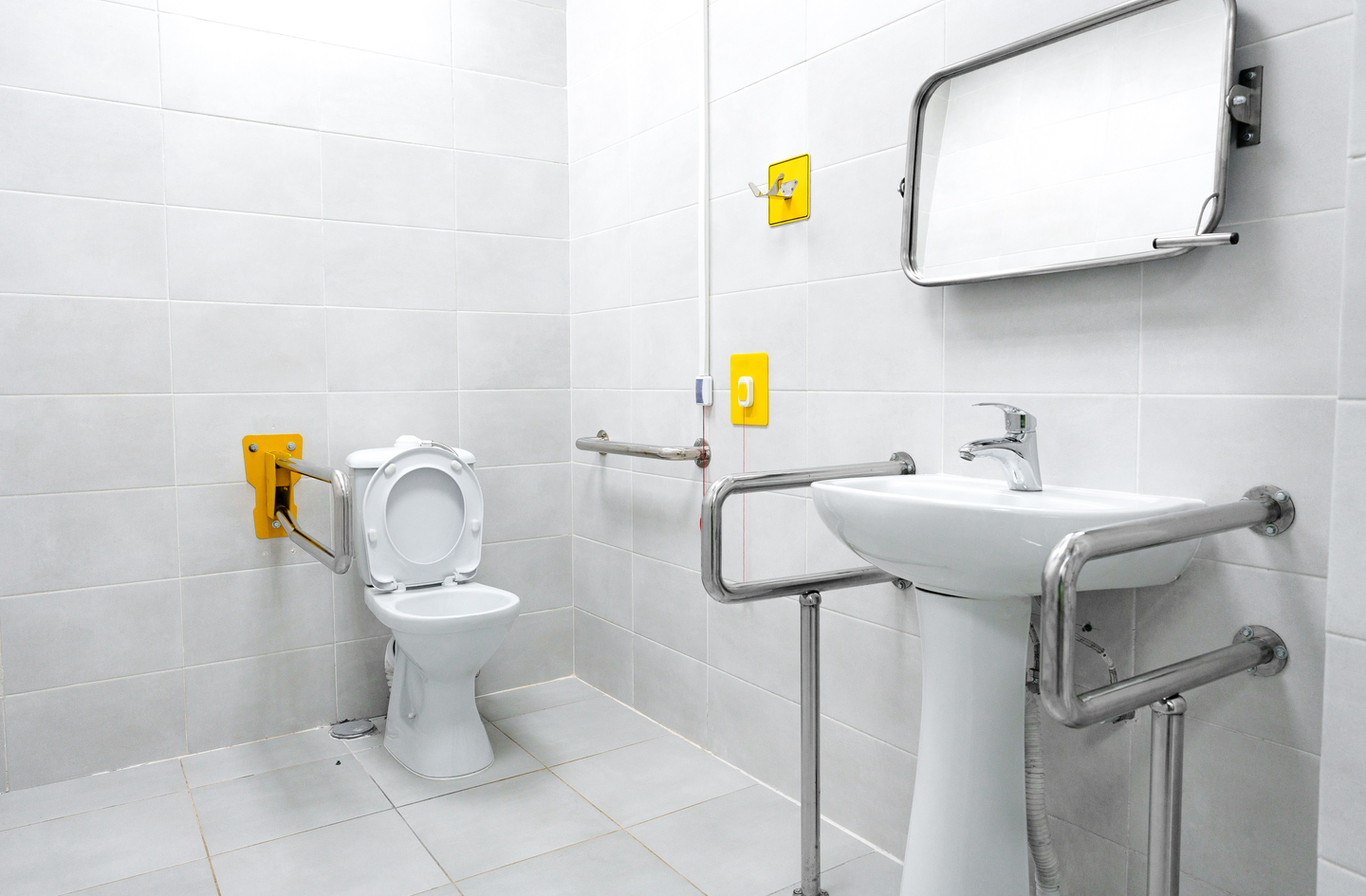
Grab bar installation, ramp construction, stair modification, and threshold removal belong with a licensed contractor. These are structural changes where the installation must meet local building standards and where anchoring to the correct wall structure is load-critical. A grab bar anchored only to drywall, not to framing or blocking, can fail at exactly the moment a person relies on it most. An aging-in-place or accessibility-experienced contractor can assess wall structure, recommend blocking placement, and install hardware to the correct load specifications. This spoke does not provide structural specifications; it identifies where the route observation has flagged a structural gap that belongs with a professional assessment.
When to involve a physician or pharmacist
Any concern about a specific medication’s contribution to fall risk belongs with the prescribing physician or a clinical pharmacist. A pharmacist-led medication review, sometimes called a Comprehensive Medication Review or a brown bag review, evaluates all medications together for interaction effects and fall risk. This is available through most primary care practices and many retail pharmacies. The senior’s documented list from step five is the input that makes this conversation productive. Bring it; do not rely on the practice’s system records to be complete, particularly for supplements and over-the-counter sleep aids.
Common Mistakes in Fall Prevention Education
The most frequent failure in home fall prevention education is starting with products. The installation of a grab bar or the removal of a rug is visible, measurable, and satisfying. But if the risk inventory in step one has not been done, the product may address a surface with low actual friction while leaving high-risk routes unchanged. Visible action that misses real risk is not just ineffective; it can create false reassurance that the education work is complete.
Teaching only one audience
Fall prevention education in households with both a senior and a caregiver often defaults to addressing only one of them. Teaching the caregiver the route observation method without including the senior treats the senior as a passive subject of safety planning rather than its primary agent. Teaching only the senior without equipping the caregiver leaves the household without a second observer who can notice gradual changes in gait, hesitation, or grip behavior over time. Both should complete step two together and understand the risk inventory from step one. The senior’s first-hand experience is the primary data; the caregiver’s role is to support that observation, not replace it.
Skipping the medication step because it feels clinical
Many caregivers and seniors skip step five because it feels like it requires a professional. The medication review with a physician does require a professional. But the preparation for that conversation, documenting current medications, noting timing and symptoms, forming specific questions, is patient education work that happens before the appointment. Skipping it means arriving at the physician visit without the information needed to make the conversation productive. Adults 75 and older carry an average of 2.2 fall-risk-increasing medications.3 Patients and caregivers who arrive informed get more actionable guidance from that conversation.
Waiting for a fall to begin education
The most costly timing mistake is reactive education: starting fall prevention work only after a fall has occurred. The NCOA’s 2025 data shows that falling once doubles the risk of falling again.2 The educational window before the first serious fall is the one with the highest potential return. Homes that complete steps one through four while the senior is fully mobile can address friction points without time pressure, involve the senior as a full decision-maker, and make changes that reflect actual movement patterns rather than retrofitting after an injury has already changed those patterns.
Frequently Asked Questions
What is the first thing to address in fall prevention education at home?
Start with a risk inventory before making any physical changes. Document fall history, current medications, sensory changes, and physical factors. This record identifies which of the subsequent steps carries the highest priority for this specific person. A 2024 JAMA review found that 27.5% of community-dwelling adults 65 and older fell in the prior year,3 with prior fall being one of the strongest individual predictors of future falls.
How does footwear affect fall risk at home?
Footwear affects gait mechanics, ground feedback, and balance envelope more than most people recognize. A clinical study found 83% of older adults wore improperly fitted shoes on at least one foot,4 and fall rates were notably higher in the ill-fitting group. Safe home footwear has a flat heel, a firm non-slip sole, a closed back, and a fastening system. Socks-only or barefoot walking indoors significantly increases fall risk on smooth floors.
Why should medications be reviewed as part of fall prevention education?
Adults 75 and older carry an average of 2.2 fall-risk-increasing medications, according to a 2024 JAMA systematic review.3 Antipsychotics, sedative-hypnotics, and loop diuretics affect blood pressure, reaction time, and muscle function in ways that directly increase fall probability. A medication review with a physician or pharmacist is often more impactful than any single home modification and can happen before any structural change is made.
When should an occupational therapist be involved in home fall prevention?
An OT assessment is most valuable for high-risk individuals: those with a recent fall history, balance or gait impairment, cognitive changes, or multiple fall-risk medications. For this group, OT-led home hazard programs can reduce falls by an estimated 38%.5 For lower-risk households, a self-conducted route walk is a productive starting point, with an OT referral for any friction point the household cannot clearly identify or address.
How often should fall prevention education be reviewed at home?
Review the risk inventory and route observation whenever a significant change occurs: a new medication, a health event affecting strength or balance, a home modification, or any fall. For households without recent changes, a once-a-year review is a reasonable baseline. The NCOA reports that falling once doubles the risk of falling again,2 so any fall should trigger an immediate review of all six steps, not just the step most directly related to the fall’s location.
Limitations and Edge Cases
- The six-step sequence is a general educational framework, not a clinical assessment. It does not replace an in-person evaluation by an occupational therapist, physician, or licensed contractor for a specific home or person.
- The fall statistics cited here are drawn primarily from US-based research populations. Program availability, building standards, and medication practice patterns vary by country and region.
- Seniors using powered wheelchairs or with significant cognitive impairment may require earlier professional involvement than this sequence assumes, starting with an OT referral alongside or before step two.
References
- National Safety Council – Older Adult Falls, Injury Facts, 2025.
- National Council on Aging – Get the Facts on Falls Prevention, May 30, 2025.
- JAMA (PubMed Central) – Colon-Emeric CS, McDermott CL, Lee DS, Berry SD. Risk Assessment and Prevention of Falls in Older Community-Dwelling Adults: A Review. JAMA. 2024;331(16):1397-1406.
- PubMed Central – Annals of Geriatric Medicine and Research – Kim and Hegazy. Enhancing Footwear Safety for Fall Prevention in Older Adults. Annals of Geriatric Medicine and Research. 2024.
- PubMed Central – Scoping Review – Supporting Implementation of Occupational Therapy-Led Falls Hazard Reduction at Home: A Scoping Review. 2025.
Conclusion
Patient education on fall prevention at home works best when the steps are ordered by what can be learned and acted on most readily, before structural modifications begin. Risk inventory, route observation, safe movement habits, footwear correction, and medication review can all be acted on before a contractor is called. They address the system behind the symptoms, which is what makes them durable improvements rather than one-time fixes. For the broader planning context, the fall-prevention priorities overview covers how this educational sequence fits into whole-home fall risk planning.
The most protective window is before the first serious fall. Observe before you renovate, and prepare the questions before you hire the professional.